North Carolina | Hurricane Helene
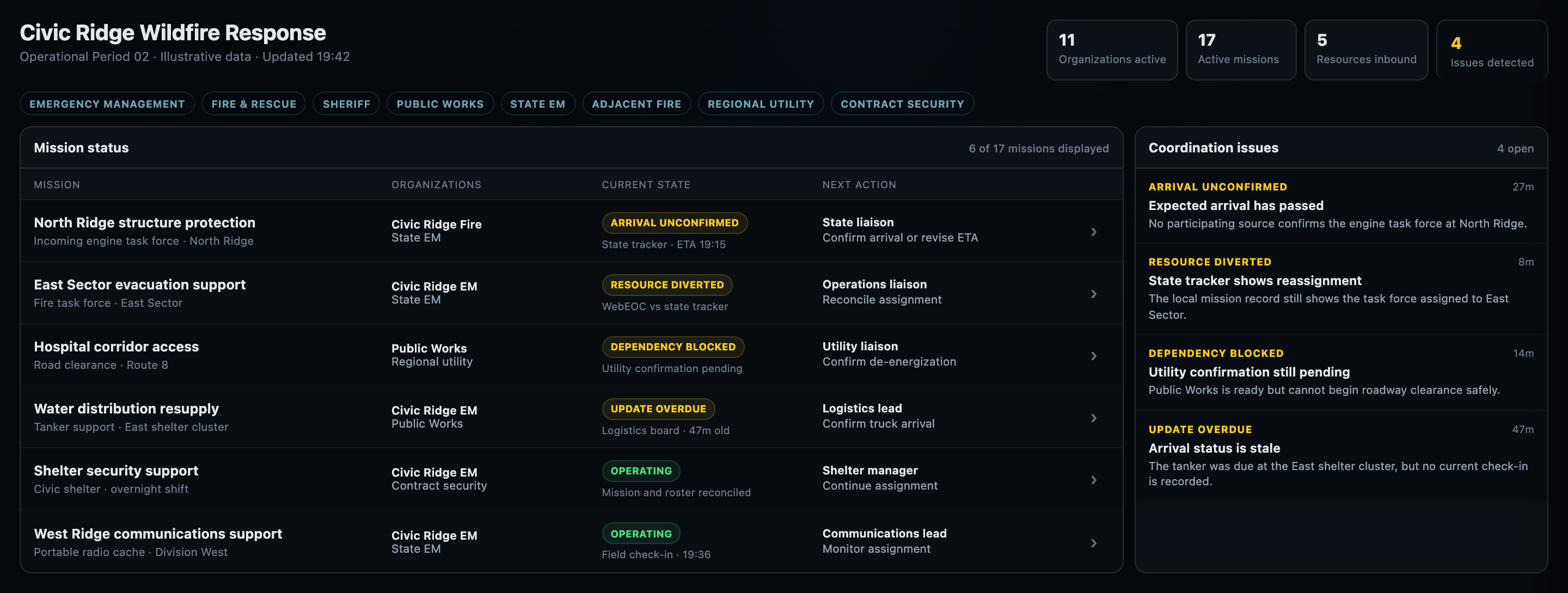
Fulfilled did not always mean arrived.
Requests sometimes appeared fulfilled even when resources were delayed, diverted, or never arrived.
North Carolina Emergency Management Hurricane Helene AAR
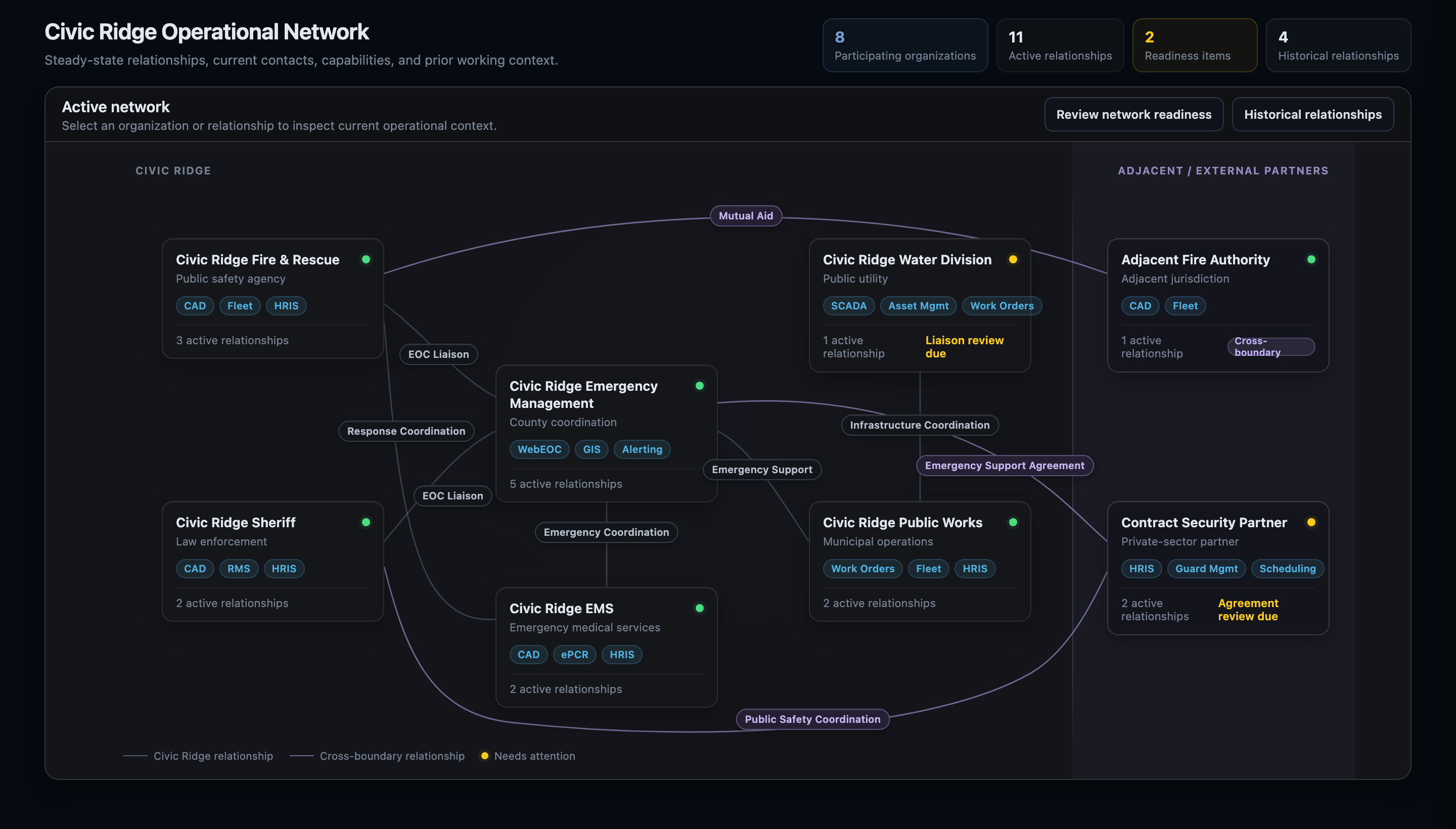
Lorica gives municipalities one place to coordinate departments, agencies, utilities, contractors, healthcare organizations, and regional partners while each keeps its own systems.
CAD, WebEOC, GIS, work-order systems, utility platforms, and department software stay in place. Lorica brings together the people, requests, capabilities, assignments, and current status that several organizations need at once.
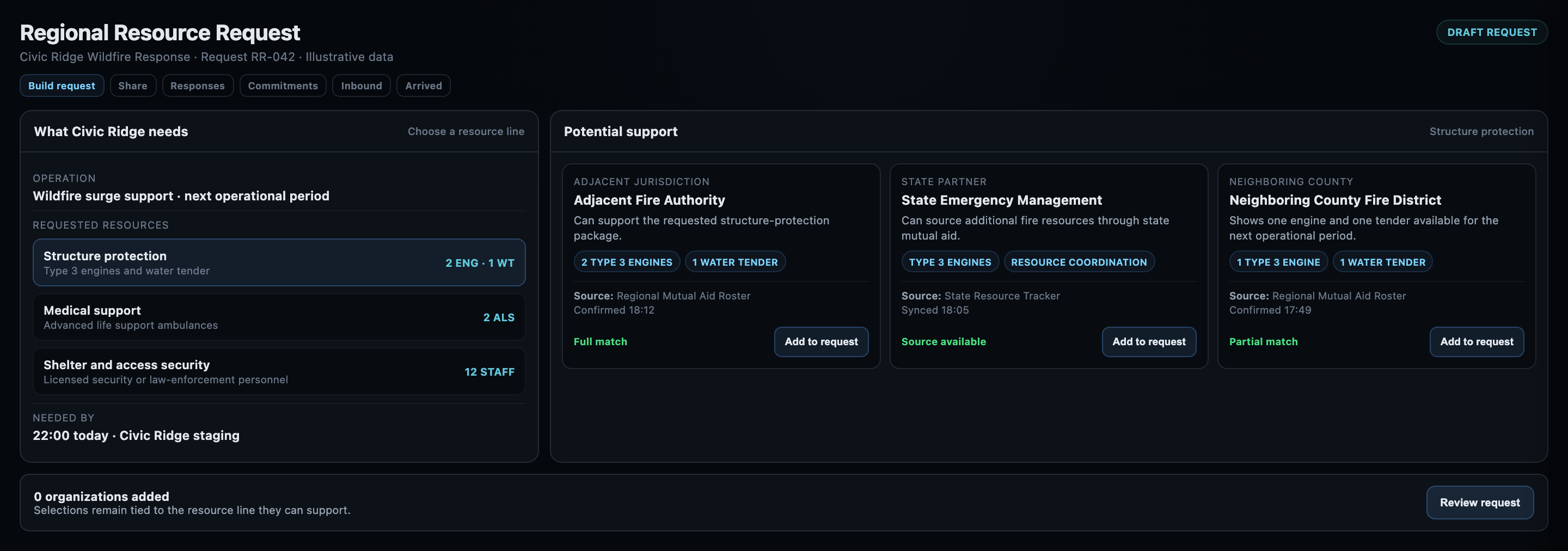
When local capacity is not enough, specify the resources you need, see which agencies and approved private providers can support each request, and add them. Responses, commitments, and arrival status stay visible as support moves into the operation.
After-action reviews repeatedly describe the same problem: operational status diverges across organizations, systems, and field activity.
Requests sometimes appeared fulfilled even when resources were delayed, diverted, or never arrived.
Staging locations changed directly with drivers while the EOC and mission records still showed the prior location.
Crews completed work without closing the associated tickets, leaving dispatchers with stale status.
Side-channel coordination made it harder to keep task status and actual field execution synchronized.
Choose a workflow that already depends on several agencies or outside partners. We can map how it works today and test whether Lorica reduces manual handoffs while the systems already in use stay in place.